Two in the Morning, One Spin, Whole City Watching: The DJs Who Decide Before the Internet Does
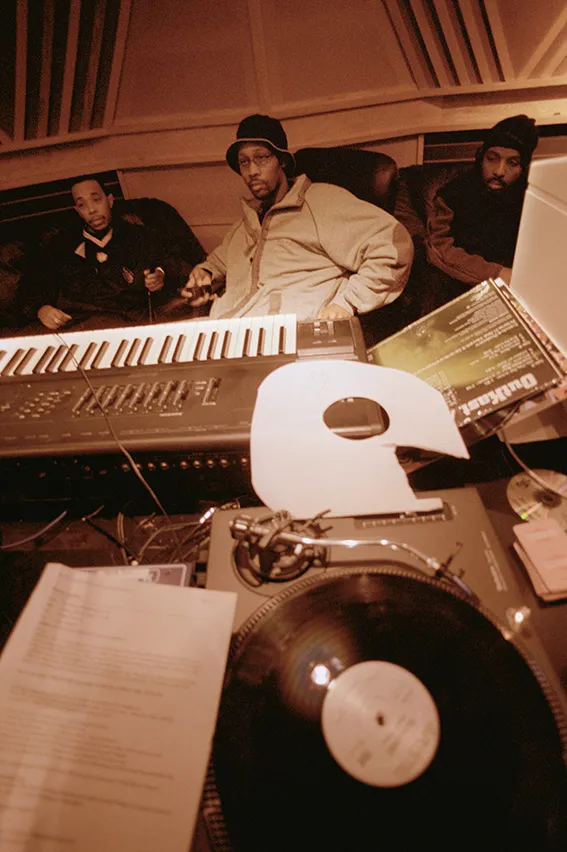
Photo: MikaV, CC BY-SA 4.0, via Wikimedia Commons
There's a moment that doesn't show up on any analytics dashboard. It's 2 a.m. at a cramped club off Peachtree, the floor is packed, and the DJ pulls an unreleased file off a cracked iPhone. No ID3 tags. No cover art. Just a voice and a beat the room has never heard before.
If the floor moves, that record exists. If it doesn't, the artist might as well go back to the drawing board. No playlist pitch can buy that moment, and no streaming number can fake it.
We sat down with three working DJs in three different markets to understand why the booth — not the algorithm — is still the real gatekeeping institution in underground rap.
The Test Audience Money Can't Buy
"A crowd is the most honest focus group in America," says Deon "Slice" Wallace, who holds down weekly slots at two Atlanta venues and a Sunday radio mixshow. "You can stream a song in your bedroom. You can't stream a room full of drunk strangers deciding in four bars whether you eat or not."
Slice estimates he breaks in ten to fifteen records a month, most of them from artists who DM him files with no label behind them. His rule is simple: if he plays something twice in one night and people ask about it the second time, he's going to keep playing it until the city knows the words.
That's how a lot of regional anthems are actually born. Not through virality — through repetition by a person the neighborhood already trusts.
Detroit's Radio Holdouts
Streaming didn't kill local radio everywhere. In Detroit, afternoon mixshows on the smaller FM and internet stations still carry the kind of pull that national programmers abandoned decades ago.
Tasha Briggs — "T-Rock" on air — has spun Michigan underground records for over a decade. "These kids send me tracks thinking I'm a stepping stone to a playlist," she laughs. "I'm not a stepping stone. I'm the whole staircase in this city. If I say it's hot, the barbershops hear it by Friday."
Her formula is unglamorous: she plays what the block already cosigns. She'll show up to local shows unannounced, watch which songs make people pull out phones, and then put those on rotation. The artists who understand this bring her music early. The ones who don't wonder why their SoundCloud numbers never convert to anything real.
Houston's Slack Culture, Formalized
Houston has always run on its own ecosystem — chopped and slowed, screw tapes passed hand to hand, a culture where the DJ was historically the producer, the A&R, and the label all at once. That infrastructure never left.
Marcus Delgado, who spins everywhere from warehouse parties to a long-running weekly on the south side, describes his role as "quality control with a subwoofer." He gets dozens of submissions a week. He plays maybe five.
"People think the DJ is a jukebox," Delgado says. "Nah. I'm the filter. I've got a reputation with four hundred people who show up every week. I burn that reputation on a wack record once, I don't get it back."
What Artists Get Wrong
All three DJs said versions of the same thing: most rappers treat the booth as an afterthought, something to worry about after the streaming push. That's backwards.
"The internet tells you what people click," Slice says. "The booth tells you what people feel. If your song can't survive a room, it can't survive anything."
The playbook they described is old school and free:
- Get the music to the DJ early. Unreleased, even. Trust builds exclusivity.
- Show up to their nights. Support is a two-way street, and DJs remember who's in the crowd.
- Don't ask for spins — earn them. Nobody owes your record airtime, and asking twice guarantees you won't get it.
- Make DJ-friendly records. Intros under eight seconds, clean transitions, a moment built for the drop.
The Booth Is the Last Honest Room
We've written before about the barbershop as rap's last honest space. The DJ booth might be its loudest. There's no engagement metric in that booth, no incentive to lie. A record either moves a body or it doesn't, and the person holding the fader is the only one positioned to know the truth before the rest of the world does.
The industry loves to talk about disruption, but the oldest distribution network in hip-hop — a DJ with pull, playing something new to a room that trusts them — still outperforms most things with a pitch deck behind it.
So the next time you're plotting your rollout, skip the spreadsheet for a second. Find the person in your city who holds the crowd every weekend. Bring them something real.
Then watch what one spin at 2 a.m. can do.