Group Home Lives: The Quiet Queens Duo Who Proved You Don't Need a Press Run to Touch a Decade
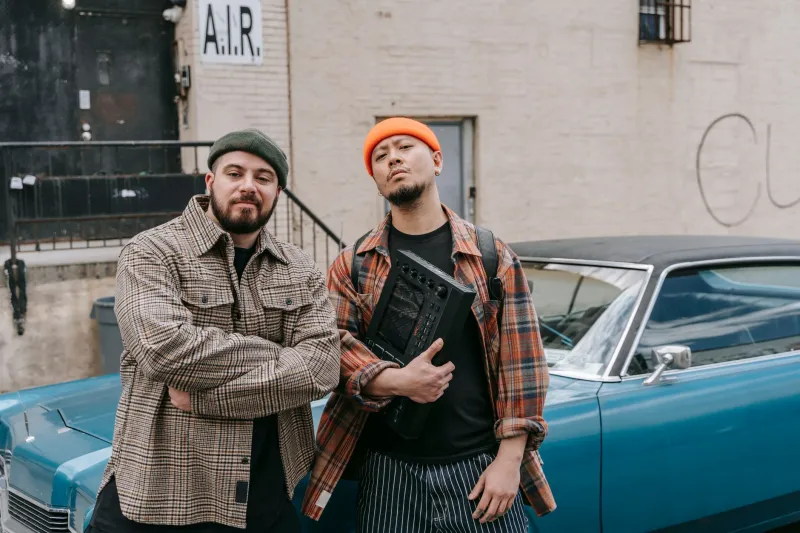
There's a certain type of rapper the internet forgot to mythologize. No think pieces, no reunion tours sponsored by a streaming platform, no documentary narrated by somebody's uncle. Just a catalog, a reputation, and a phone that still rings when a promoter in Germany needs a name from the '90s that the crowd will actually scream for.
Group Home is that type of act. Queens-bred, pre-gentrification New York through and through, and living proof that the underground doesn't reward the loudest — it rewards the ones who never stopped showing up.
The Winter That Built a Legacy
Ask any head who came up in the mid-'90s East Coast scene about that era and they'll tell you the same thing: the cold made the music colder. Group Home came out of that landscape — a pre-gentrified NYC where studio time meant somebody knew somebody, and a demo tape got passed hand to hand like contraband.
What separated them from the pack wasn't flash. It was texture. Their sound sat in that gray zone between street report and smoke-filled room — the kind of record a DJ could spin at 1 a.m. and nobody would leave the floor. That's not a compliment you earn with a budget. That's one you earn by knowing exactly who you are before the first take.
No Press Run, No Problem
Here's the part that should make every independent artist in 2024 sit up straight: Group Home built staying power without a marketing department, without a rollout calendar, without a single coordinated content drop.
Their model was simple and brutal. Make records that sound like the city. Play every show like it's the last one. Let the streets do the rest. Word of mouth in New York moves faster than any algorithm — it always has. A brooklyn barber co-signs you, a Bronx DJ breaks your single, and suddenly you're a name in three boroughs before you've printed your first shirt.
That's the version of 'going viral' that existed before going viral was a thing. And unlike a TikTok trend, it doesn't expire in 72 hours.
What the Streaming Era Could Learn From Them
The modern indie rapper has more tools than Group Home ever had. Distribution is a button. Beats are a subscription. The entire planet is one upload away. And yet most of it evaporates — because the tools got confused with the foundation.
The foundation was always the same three things:
- A sound you can't fake. If your voice doesn't sound like where you're from, no plugin fixes that.
- A live show that earns the next one. Promoters talk. So do crowds.
- Patience measured in years, not quarters. The industry thinks in fiscal cycles. The streets think in decades.
Group Home checked all three boxes before the internet could tell them which box to check first. That's why a group with no chart-topping single can still get booked across the Atlantic off the strength of a reputation built thirty years ago.
The Lesson for Everybody Grinding Right Now
If you're coming up in 2024 — whether that's Queens, Atlanta, Houston, or some small town with one open mic — the playbook isn't complicated. It's just unglamorous.
Build the catalog first. Let the records be the résumé. Take the $200 door-split show in a city two hours away because that's how you find your second city, then your third. Answer the DM from the kid who wants a feature, because today's unknown collaborator is tomorrow's co-sign with a bigger audience.
Group Home never chased the moment. They outlasted it. And in a scene where everybody's optimizing for the next 48 hours, outlasting is the rarest flex left in the game.
No filters. No shortcuts. Just records that still knock and a name that still books. That's street truth you can't manufacture.