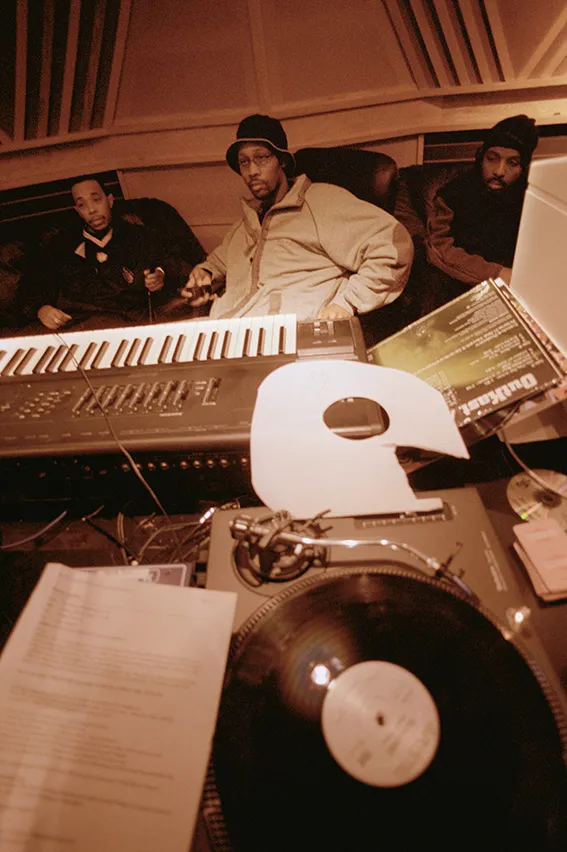
Twelve Folded Chairs and a Real Career: Why the Dead Tuesday Show Still Matters
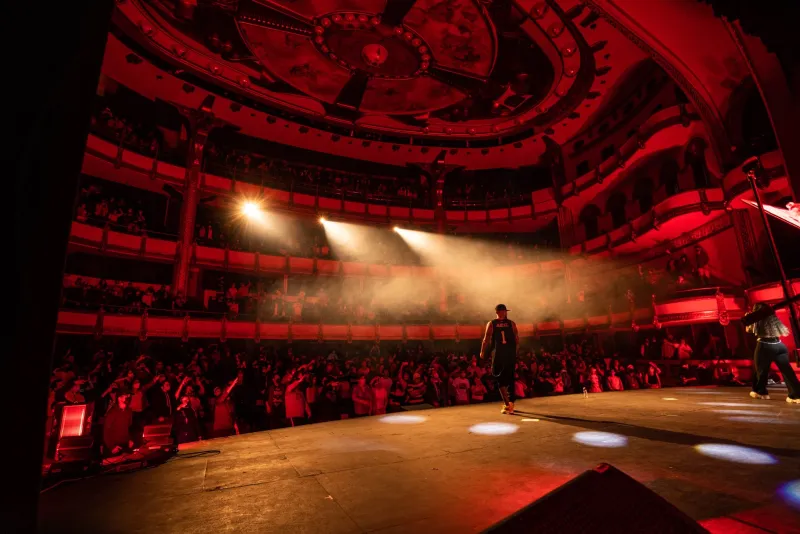
The room holds forty if everybody stands shoulder to shoulder. Tonight there are eleven of us, and four of those are the opening act's cousins. The sound guy is eating a gas station sandwich behind the board. Somebody's phone is dead. Nobody is filming. The headliner goes on at 10:40 and does twenty-five minutes to a crowd that could fit in a booth at Denny's.
That show is the whole point. Not the sold-out one.
The Night Nobody Clapped
There is a specific kind of silence that greets a rapper who has never played to fewer than a hundred people. It is not hostile. It is just airy. You can hear the ice settle in cups. You can hear your own breath between bars. And in that silence, you find out real quick whether you have a show or just a mixtape with a backing track.
Artists who come up doing packed rooms first — the ones who open for a buzzing act at a 600-cap, ride the spillover crowd, get the video clip, get the next-up post — often never learn how to hold a room that doesn't already want to be held. They learn to ride a wave. They don't learn to make one.
The ones who come up in the eleven-person Tuesday-night room learn something else. They learn pacing. They learn where to breathe. They learn that the third row isn't a wall, it's a conversation, and if you lose them you can get them back with a joke, a pause, a story about the bus.
What a Small Room Teaches That a Big One Can't
A big room covers for you. The lights cover for you. The crowd's own noise covers for you. A half-empty room does the opposite: it exposes everything. If your intro is too long, everybody feels it. If you're rapping at the crowd instead of to them, everybody feels that too.
Nobody in that room is there for the content. They're there because somebody dragged them, or because they actually like the music, or because a friend is on the bill. That's a real audience. That's the audience that buys a shirt, tells one person, and comes back in six months with two friends.
The algorithm gives you numbers. A twelve-person room gives you names. Twelve names, if you treat them right, turn into forty. Forty turn into a hundred and twenty. That compounding is slow, unglamorous, and the only thing that has ever worked.
The Opener Brought Nine People. That's Not Embarrassing.
There's a habit in underground rap of dunking on the artist whose entire crowd is their group chat. I get the joke. I also think it's backwards.
Nine people who showed up for you on a Wednesday in a city where it's raining sideways is nine more than most people will ever get to stand in front of. Nine people who will remember the night. Nine people who saw you before anybody else did.
The embarrassment is not the size of the crowd. The embarrassment is a rapper who treats those nine people like a problem. Who shows up late. Who does three songs and dips. Who looks past them at the door the whole set, waiting for someone more important. Nine people can smell that from the back of the room.
Chasing the Full House Too Early
Here is the part that actually kills careers: the pursuit of the packed room before the work is ready.
People buy the fake crowd. They buy the playlist placements, the engagement pods, the $400 showcase slot where the promoter guarantees a room of people who were paid to be there. They get the photo. They get the clip. They get the feeling of a full house. Then the room empties, and there's nothing behind it.
You can fill a room with strangers once. You cannot fill it twice without a real crowd. And the only way to build a real crowd is to do the small rooms — the awkward ones, the ones where the bartender is louder than the crowd.
There's an old joke in comedy about the guy who bombs in front of six people and quits, and the guy who bombs in front of six people and comes back the next week. Only one of them is a comedian. Same thing applies here.
The Fans You Can Name
Ask any artist who's been at it ten years with a real fanbase — not a viral one, a real one — and they can tell you about the first ten people who showed up twice. Not the first ten thousand streams. The first ten faces that came back.
Those are the people who carry you through the years when the algorithm moves on, when the single flops, when the tour loses money. They buy the vinyl. They come to the bar show. They tell the friend. You do not get them from a big room. You get them from a small one, over and over, until they know your name and you know theirs.
How to Run a Dead Night Right
If the room is empty, treat it like a rehearsal that pays in something other than money. Tighten the set. Cut the dead air. Talk to the nine people like they're people. Play the song you're not sure about and watch their faces. Learn what lands with a crowd that has no obligation to clap.
Then go back. Next month, same room. Ten people. Then fourteen. Then the night the room feels a little full, you'll actually be ready for it — because you're not chasing a moment, you're building a floor.
The Long Game
The full room is not the goal. The full room is the byproduct. The goal is to be the kind of artist who can play to eleven people on a Tuesday and make them feel like they saw something. Do that long enough and the eleven becomes forty, the forty becomes a line around the corner, and the line around the corner actually knows the words.
The empty room isn't where careers go to die. It's where they go to get built. Eleven people is enough. Ask anybody who's still here.