Two Turntables and a Timer: Battle Rap's Unplanned Comeback Tour
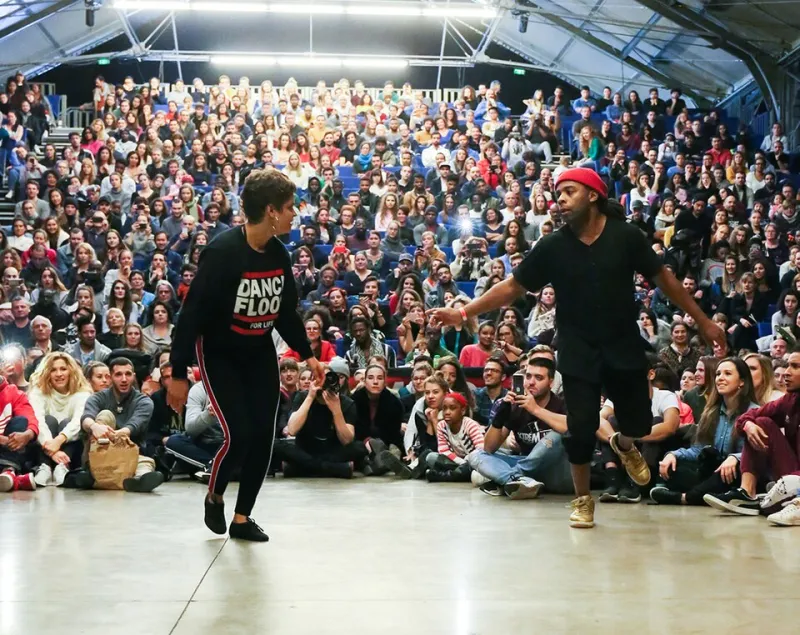
Photo: Séverine Troichien, CC BY 4.0, via Wikimedia Commons
Somewhere in a Bronx event space right now, two people who have never met are writing each other's obituaries in triple entendres, and 40,000 people are going to watch it on YouTube by Friday.
If you checked out on battle rap after the Smack DVD era, wake up. The culture you thought died with the bootleg market is having its biggest moment in over a decade, and it's happening without a single radio spin.
The Algorithm Can't Fake a Live Crowd
Here's the dirty secret of streaming-era hip-hop: most of it is engineered to be ignorable. Playlists optimize for "don't skip." Battle rap optimizes for the exact opposite — make the whole room scream or go home.
That tension is the product. When a battler lands a scheme that flips their opponent's own bars against them, there's no playlist algorithm smoothing it out. There's just a crowd losing its mind and a clip that travels. And unlike a TikTok sound, that clip carries the entire performance with it. Context survives. Bars survive.
Leagues like URL, KOTD's American offshoots, and a hundred regional circuits figured out something the majors still haven't: the live event is the asset, and the content is the marketing. Every battle is filmed like a pay-per-view, cut into viral rounds, and dropped on a schedule that trains the audience to come back. It's the release strategy the rest of the industry pretends it invented.
From the Proving Ground to the Pipeline
What used to be a niche is now openly functioning as an A&R department with no office. Battles are auditions that thousands of scouts, fans, and fellow artists watch simultaneously.
Look at the track record. Artists who built their reps in the ring are translating it into placements, production deals, and touring income — because a battler who can hold a room for three rounds cold doesn't need Auto-Tune to prove they can rap. When a clip does seven figures in views, that's not a demo reel. That's leverage.
The economics back it up. Top-tier battlers command real purses now, four figures and climbing for the elite, plus pay-per-view cuts on major events. Mid-tier competitors make money on a mix of battle fees, feature verses, and the merch table — the same indie economics every grassroots artist knows. The difference is battle rap built a fanbase that pays directly, event by event, without asking a label's permission.
And the training effect is real across the whole genre. Young writers are studying rounds the way old heads studied freestyle cassettes. Punchline density is back. Multisyllabic schemes are back. The cypher ethos — you, me, no beat, no hiding — is leaking back into mainstream rap whether the mainstream admits it or not.
Why Right Now? Blame the Feed
The resurgence isn't an accident. It's a correction.
A decade of algorithm-fed singles trained listeners to consume music in 15-second slices with zero stakes. Battle rap is the antithesis: long-form, high-stakes, human. No ghostwriters, no plausibly deniable features, no committee-written bars. Just two names on a flyer and a timer.
There's also the authenticity tax. Audiences in 2025 can smell manufactured artist from a mile away, and they're starving for proof of skill. Nothing proves skill like live competition where the loser is decided by the crowd in real time. It's sports logic applied to bars — standings, rivalries, rematches, legacies. The leagues understood they weren't selling rap; they were selling stakes.
Streaming platforms accidentally helped too. YouTube's long-form ecosystem rewards content people watch to the end, and a heated third round is the most rewound 90 seconds in hip-hop right now. The clips feed the algorithm; the algorithm feeds the rooms; the rooms feed the culture.
Keep Your Eyes on the Room
Here's my take, since you came here for one: battle rap's comeback isn't a trend, it's a reminder. It reminds the whole genre that lyricism was never the problem — the delivery system was. Strip away the marketing machinery and people still want to watch two rappers try to end each other's careers with wordplay.
The leagues that survive will be the ones that keep the bar high and the production tight. The artists who come out of it will be sharper for it. And the rest of hip-hop would be smart to pay attention, because the 3 AM freestyle economy doesn't sleep.
The crowd always knows. It knew in the cafeteria in 1985 and it knows in the streamed arena now. Some things don't need an algorithm to tell them what's real.