Carded at the Door of Your Own Scene: The Liquor Math Killing All-Ages Rap

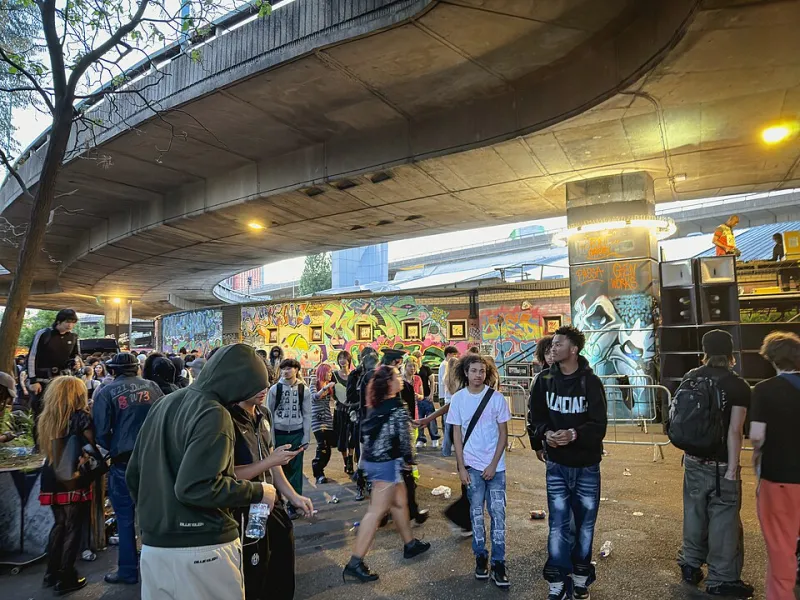
Photo: Erik Drost, CC BY 2.0, via Wikimedia Commons
There's a kid outside the venue right now, hoodie up, holding a ticket he bought with three weeks of dishwashing money. He's seventeen. The show is rap. The door guy checks his ID, shakes his head, and points at the sign taped over the window: 21+ ONLY. The kid doesn't argue. He just stands there for a second, listening to the bass leak through the brick, then walks back to the bus stop.
That scene plays out in every city that still has a rap scene worth caring about. And it's not because promoters hate teenagers. It's because the money stopped making sense.
The Bar Is the Business Now
Go back fifteen years and a lot of underground rap shows ran on a simple model: charge ten bucks at the door, pay the sound guy, split the rest with the artists. Maybe the venue sold some beers, maybe not. The point was the room. The point was the culture.
That model is mostly gone. Venues figured out that a rap show with a $10 cover and a crowd of kids drinking water is a worse night than a birthday party with a $400 bar tab. Insurance companies figured it out too. So did the people who write liquor licenses.
Here's the math a promoter in Cleveland walked me through last month: to keep an all-ages show legal, the venue needs a specific license classification, extra security, and a documented barrier between the bar and the floor. In some states that means wristbands and a separate server. In others it means the bar can't serve at all during the set. Either way, the venue's dram shop insurance — the policy that covers them if someone gets overserved and hurts somebody — gets more expensive the moment underage people are in the building, even if those underage people never touch a drop.
So the venue does what any business does. It prices the risk into the rental. And suddenly the all-ages show costs $600 more than the 21+ show for the exact same room.
The Drink Minimum Is a Talent Tax
Most promoters won't call it a drink minimum because it sounds sleazy. They'll call it a "bar guarantee" or a "minimum spend." Same thing. The venue wants to know that the room will generate a certain amount of alcohol revenue, or the promoter covers the difference out of pocket.
For a 21+ show, that number is usually reachable. Adults drink. They buy rounds. They tip. For an all-ages show, that number is a fantasy. Kids buy sodas and split them. They stand near the bar because that's where the outlets are. They don't generate the kind of revenue that keeps the lights on.
Which means the promoter has two choices. Eat the difference, or stop booking all-ages shows. In 2026, with rents up and insurance up and every venue owner staring at a spreadsheet, most promoters choose the second option. Not because they're villains. Because they're tired of losing money on a Tuesday.
The Pipeline Doesn't Run on Grown Folks
Here's what gets lost in the spreadsheet: the underage crowd is not a charity case. They're the farm system.
The seventeen-year-old who can't get into the show tonight is the same kid who would have been in the cypher outside afterward. He's the one who would have bought the merch, learned the hooks, told his friends, and come back in three years with his own set. He's the one who eventually becomes the twenty-five-year-old who buys the $40 ticket and the $12 cocktail and keeps the venue alive for the next generation.
Cut him off now, and you don't just lose a ticket sale. You lose the whole arc. You lose the kid who would have been the local opener in 2029. You lose the fan who would have been the guy bringing five friends to the headliner in 2031. The bar thinks it's protecting its margin. It's actually eating its own seed corn.
And it's not just fans. Young artists get hit harder. A sixteen-year-old with bars and a phone full of beats can't perform at a 21+ venue, obviously. But she also can't perform at a lot of the all-ages spaces that used to exist, because those spaces closed or converted to bar-only models. The community centers lost funding. The church basements got rezoned. The coffee shops stopped doing shows because the espresso machine broke and the owner was tired.
So the kid with the notebook stays in the bedroom. Not because she lacks talent. Because there's nowhere to stand.
The Workarounds Are Real but Fragile
Some promoters are trying. They book all-ages shows at DIY spaces, skate parks, record stores, and the occasional VFW hall. They keep the door cheap and the bar closed. They pass a hat for the touring artist. It works, sometimes, in cities where the rent hasn't completely eaten the margins.
But it's fragile. One noise complaint, one insurance claim, one landlord who decides he wants a tenant that sells flat whites instead of rap shows — and the room disappears. The 21+ bar down the street survives because it has a liquor license and a business model that doesn't depend on a teenager's ten-dollar bill.
That's the real divide. It's not about who gets to rap. It's about who gets to own the room. And right now, the room belongs to the bar.
What Rap Loses When the Door Stays Shut
Rap was built in spaces that didn't care about age. Block parties. Rec centers. Basement studios. The park. The whole point was that the music was accessible — that you didn't need a fake ID to belong.
Every time a venue goes 21+, that accessibility shrinks. The scene gets older, wealthier, and smaller. The music gets more polished because the only people in the room are the ones who can afford to be there. The raw stuff — the seventeen-year-old with the wobbly flow and the real story — doesn't get a stage. It gets a bedroom.
So the next time you see a 21+ sign on a rap show, don't just think about the bar tab. Think about the kid at the bus stop. Think about the opener who never got to open. Think about the whole pipeline that runs on cheap door covers and all-ages crowds and the belief that a sixteen-year-old with something to say deserves a microphone.
The liquor license is a piece of paper. The scene is what happens when you let people in.