Ninety-Nine People and a Deadbolt: How the Basement Cap Became Rap's Real Gatekeeper
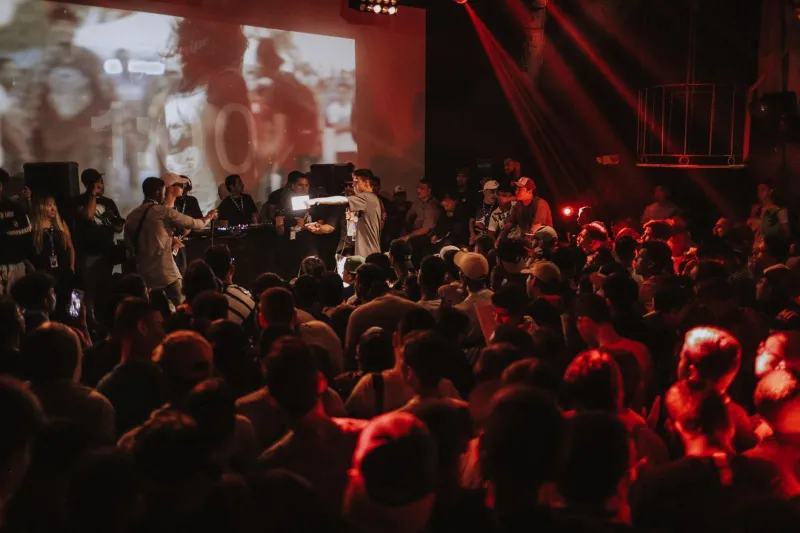
The text came in at 9:14 p.m.: MOVED. SAME DOOR CODE. DON'T PARK ON THE BLOCK. By 10, a line of kids in Carhartt hoodies and beat-up Air Forces stretched past a laundromat on the edge of Bed-Stuy, waiting for a door that wasn't supposed to have a line at all. The show was billed as a birthday party. The flyer had no address, just a QR code and a photo of a fire extinguisher with a smiley face taped over the label. Capacity inside: forty-nine. People outside: closer to a hundred.
This is what underground rap looks like in 2026 — not a club, not a theater, a room with a legal maximum and an illegal reputation. And the man who actually decides who gets onstage isn't a label scout or a playlist curator. It's the fire marshal, or the cop who rolls by at 11:30, or the landlord who smells the weed through the radiator and calls it in. The placard by the door is the real gatekeeper. Everything else is just marketing.
The Placard Is the New Demo Tape
Ask a promoter in Philadelphia what it costs to book a basement and they'll laugh before they answer. The rent is cheap — three, four hundred for the night if you know the tenant. The problem is everything that comes after. A legal capacity of fifty means you sell fifty tickets at fifteen bucks and you're already underwater once you pay the sound guy, the door person, and the kid who runs the lights. Push past the posted number and you're gambling on a fine that starts around a grand and climbs fast. Get caught twice and the building gets flagged, the tenant gets a letter, and the whole address goes dark for a year.
So promoters do math that nobody teaches in business school. They cap the guest list. They sell presale to a text thread of regulars. They hand out wristbands in a different color every month so the door can spot a screenshot from three weeks ago. The scarcity isn't a vibe — it's a survival tactic. But it does something else, too. It turns a ticket into a status symbol. If you got in, you were early. If you got in twice, you're family.
"I've had artists offer to pay me to open," says a promoter who runs a warehouse series in Oakland and asked not to be named because half his shows are unpermitted. "Not because they think it's a scam. Because they know forty people in a basement is worth more than four hundred in a strip mall venue with bad sound and no energy. They want the room. The room is the resume."
The Last-Minute Shuffle
On any given Friday in Chicago, there are probably a dozen rap shows that were supposed to happen somewhere else. A gallery loses its insurance. A bar gets a noise complaint from a neighbor who's lived on the block for thirty years. A fire inspector walks through a DIY space and finds a string of Christmas lights plugged into a power strip plugged into another power strip, and suddenly the whole calendar gets reshuffled like a deck of cards.
The artists eat the cost. Not just gas money — credibility. A rapper who promotes a show for three weeks and then has to post "NEW LOCATION TBA" two hours before doors loses a chunk of the audience that was already on the fence. The ones who show up anyway become the real core. That's the trade-off nobody talks about: every venue shutdown is a filter. The casual fans drop off, the diehards get closer, and the scene gets smaller and tighter and harder to break into.
That tightness is where the favoritism starts. When a room holds fifty, the promoter's phone becomes the most important number in the city. Who gets the opening slot? Who gets the prime 11 p.m. set? Who gets to sell merch on the folding table by the bathroom? The answers usually come down to who showed up last month when nobody knew their name. It's not corruption, exactly. It's just the natural politics of a small room.
Pay-to-Play Wearing a DIY Mask
The ugly side is what happens when the demand outruns the supply. A twenty-minute set in a basement with forty people can cost an artist fifty, sometimes a hundred bucks — not as a ticket split, but as a straight fee to the promoter. The pitch sounds reasonable: "It's not pay-to-play, it's a production contribution." But it functions the same way. New artists who can't afford it get pushed to the back of the line, and the ones with a day job or a supportive uncle get a stage they didn't earn.
Veterans in the scene see it and hate it, but they also understand it. Permits aren't free. Insurance isn't free. A decent PA and a sound engineer cost more than the door take on a Tuesday. The DIY economy is held together by people who are essentially subsidizing the culture out of their own pockets. When the fire marshal cracks down, those pockets get thinner.
The Room Always Wins
Here's the part that doesn't fit on a spreadsheet: the fire marshal is a terrible A&R, but he's an honest one. He doesn't care about your follower count or your rollout plan. He cares about the exit sign and the number of people standing between it and the stage. That means the underground is being curated by building codes and landlord anxiety and the price of a liability waiver — forces no rapper can charm, no publicist can spin.
And somehow, the music is better for it. Strip away the capacity, and you're left with a kid on a milk crate, a DJ with a laptop and a busted crossfader, and fifty people packed shoulder to shoulder because they actually want to be there. That's not a business model. It's a scene. The line outside the laundromat moves slow, the door code changes every week, and the placard by the door says forty-nine. But everybody in the room knows the number that matters is zero — as in zero degrees of separation between the artist and the people who paid to stand three feet away.
The fire marshal can shut down the room. He can't shut down the reason people keep packing it.