Somebody's Getting Rich Off Your Two-Minute Set: The Open Mic Racket, Examined
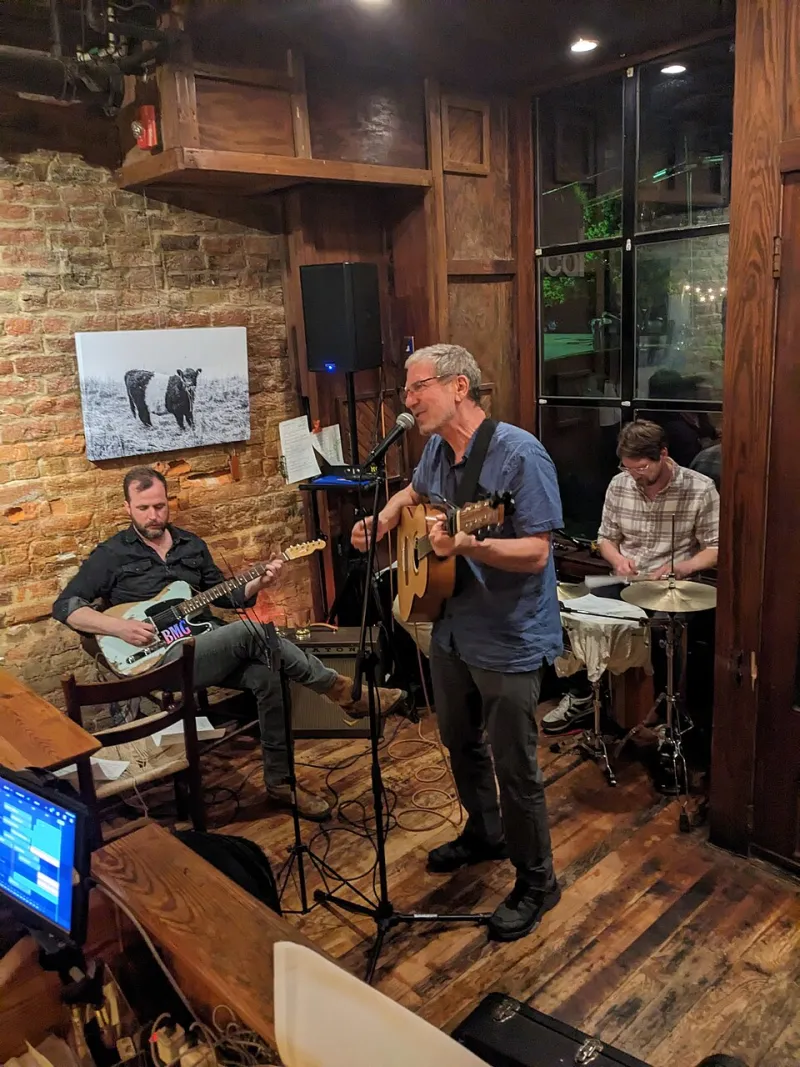
Photo: Artaxerxes, CC BY-SA 4.0, via Wikimedia Commons
Let's Do the Math They're Hoping You Won't Do
Here's a night in almost any major American city. A bar in a gentrifying neighborhood, a flyer with six names on it, a sign-up sheet that costs $10 to join. Twenty performers, each one told to "bring at least five people." Door charge: $10 a head. Two-drink minimum.
Run the numbers. Twenty performers times five guests is a hundred people at $10 — that's a grand at the door before a single drink is poured. The "headliner" gets $100, maybe $150. The host gets a tip bucket. The venue keeps the bar, the door, and the sign-up fees. Somebody just cleared $800-$900 for renting out a room they already lease and a PA system they bought once, in 2019.
And here's the part that should make your blood boil: the performers are the customers. They paid to be there. They paid to perform. The audience is just other performers waiting their turn, scrolling their phones, barely clapping.
The Pay-to-Play Machine
Let me be clear about my position: the open mic itself is one of the oldest and most sacred institutions in this culture. Every legend you can name took their first L in front of twelve people in a coffee shop. That's not what I'm attacking.
What I'm attacking is the business model that's grown around it like barnacles. Because somewhere in the last decade, hustlers figured out that rappers are the only performers in America who will reliably pay for the privilege of performing. Comedians got wise and unionized their expectations. Musicians demand guarantees. Rappers? Rappers will pay YOU to listen to them, and call it an opportunity.
The scam ecosystem looks like this:
- The sign-up fee. $5 to $15 just to get on the list. Non-refundable, obviously.
- The guest quota. "Bring five people or you don't perform." You're now an unpaid promoter doing free marketing for someone else's business.
- The add-on upsell. $50 for a "featured slot," $75 for a performance video you'll never actually receive, $100 to be considered for "the showcase."
- The showcase itself. A bigger event, bigger fee, where A&R reps are "in the building" — reps who, more often than not, are the same guy who runs the showcase.
It's a funnel. The product is hope, and hope has incredible margins.
How to Spot a Real Room From a Racket
Not every night charging a door fee is a scam — that's the nuance most takes miss. Venues have real costs. Sound engineers deserve to get paid. So how do you tell the difference between a legitimate room and a talent tax?
Look at who makes money if nobody shows up. If the host eats the loss, it's a real business taking a risk. If the performers cover the guarantee through their guest quotas, you're the business.
Check who's in the audience. At a real open mic, there are people there who came to listen. At a racket, the crowd is 90% performers waiting to go on. If everyone in the room is selling and nobody's buying, you're not at a show — you're at a sales meeting.
Follow the video. Real nights film sets and post them because the content markets the night. Scam nights charge you for your own footage, then never deliver, because the video was never the point.
Ask last month's performers. This is the big one. Anybody can look good on a flyer. DM three people who performed at the previous edition and ask one question: "Would you do it again?" The silence tells you everything.
The Real Cost Isn't the $10
Here's what actually hurts about the pay-to-play circuit. It's not the ten bucks. It's the opportunity cost. Every Tuesday you spend performing for a room of other rappers is a Tuesday you didn't spend recording, or building an actual audience online, or doing the free showcase at the barbershop where real people might actually become fans.
The grind culture we celebrate on this site — the late nights, the sacrifice, the do-it-yourself ethos — is exactly what these operators weaponize. They know you've been told that paying dues is noble. So they sell you dues. By the bag. But dues are supposed to go toward something. Suffering without strategy isn't paying dues. It's just paying.
The Verdict
The open mic circuit, as it currently operates in most American cities, is roughly 20% proving ground and 80% hustle — and the 20% is worth protecting, which is why I'm not telling you to stop going. I'm telling you to go smart.
Perform for free at a real room with a real audience. Never pay to be on a list. Never accept a guest quota you wouldn't accept from an employer. And the next time a promoter tells you this is how the industry works, remember: the industry works by paying you eventually. Everything else is just somebody else's rent money wearing a lanyard.
The door deal launches careers, the flyer says. Sure. But check whose name is on the lease.