No Cover, No PA, No Permission: Inside the Parking Lot Cyphers Keeping Rap Raw
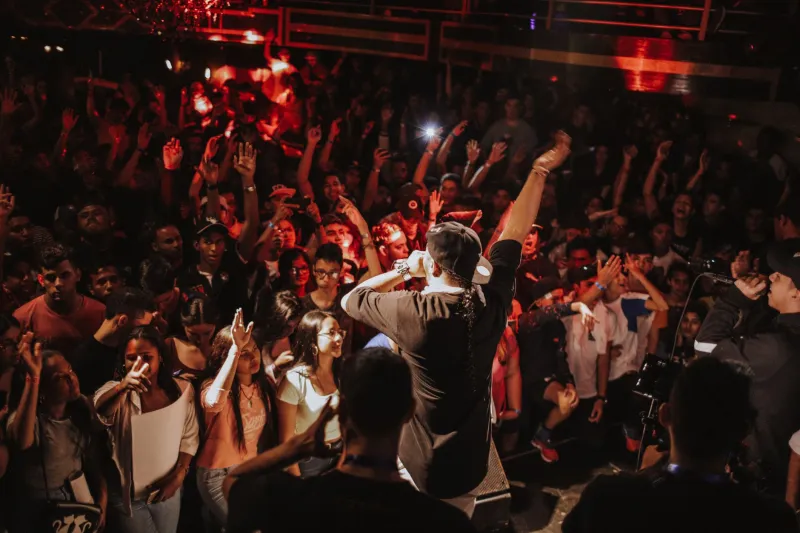
The mic is a phone flashlight. The stage is oil-stained asphalt. The security is a guy named Deon who everyone happens to respect. If you've never pulled up on a cypher spilling out of a gas station lot at 11 p.m., you've only ever heard rap described to you.
The Circle Forms the Same Way Everywhere
Detroit, Memphis, Houston, the Bronx — the mechanics don't change. Somebody's got a Bluetooth speaker from the corner store. Somebody else starts a beatbox pattern or just claps. One person raps, and the crowd's reaction decides everything. No algorithm, no playlist editor, no promoter skimming the door. Just volume and necks.
That's the whole business model. There isn't one.
Learning the Crowd the Hard Way
Marcus Ellison, a 24-year-old rapper out of East Cleveland, says he did two years of SoundCloud promotion before a single stranger ever played his music back to him. Then one night outside a Speedway on Euclid Avenue, his cousin dared him to rap in a circle. He did. A guy filmed it. Ninety thousand views by Friday.
"Online, they scroll past you," Ellison told me. "In the lot, they gotta stand there and look at your face. That's the difference. You can't skip a human being."
That forced attention is the product. A parking lot cypher is the only venue left where the audience can't leave without walking through you.
Why the Lot Beats the Open Mic
We've covered the open mic racket on this site before — the $10 sign-up fees, the two-minute sets, the booker who vanishes before your slot. The parking lot asks for none of it.
No sign-up sheet. No house rules. No sound guy telling you your levels are off. The lot is the last space in American music where nobody owns the room.
And that's precisely what makes it dangerous — to artists and to the people who'd rather they weren't gathering there.
The Pushback Is Real
Corner stores have started shooing cyphers off their lots, especially after police visits. In some cities, loitering ordinances do the quiet work of shutting down the most organic rap scene in the country. The irony writes itself: the genre born on the block keeps getting told to leave the block.
Ellison's crew adapted. They rotate locations like a card game — different lots, different nights, word travels by group chat. "It's like a spot that only exists when we're there," he said.
Final Frontier or First Principles?
There's a fair question in whether the parking lot cypher is hip-hop's future or its museum. Most of these circles never convert to streams. The footage that goes viral belongs to whoever held the phone, not whoever held the beat.
But ask around and the artists don't see it as a stepping stone. They see it as the standard. If your bars can't hold a circle of strangers on concrete, no mastering plug-in is saving you. The lot is the A&R that can't be emailed, the crowd that can't be bought.
Everything in this industry got a paywall. The parking lot didn't get the memo. Long may that last.