The Tour Tee Is the New Lookbook: How Rapper Merch Tables Became Fashion's Best-Kept Secret

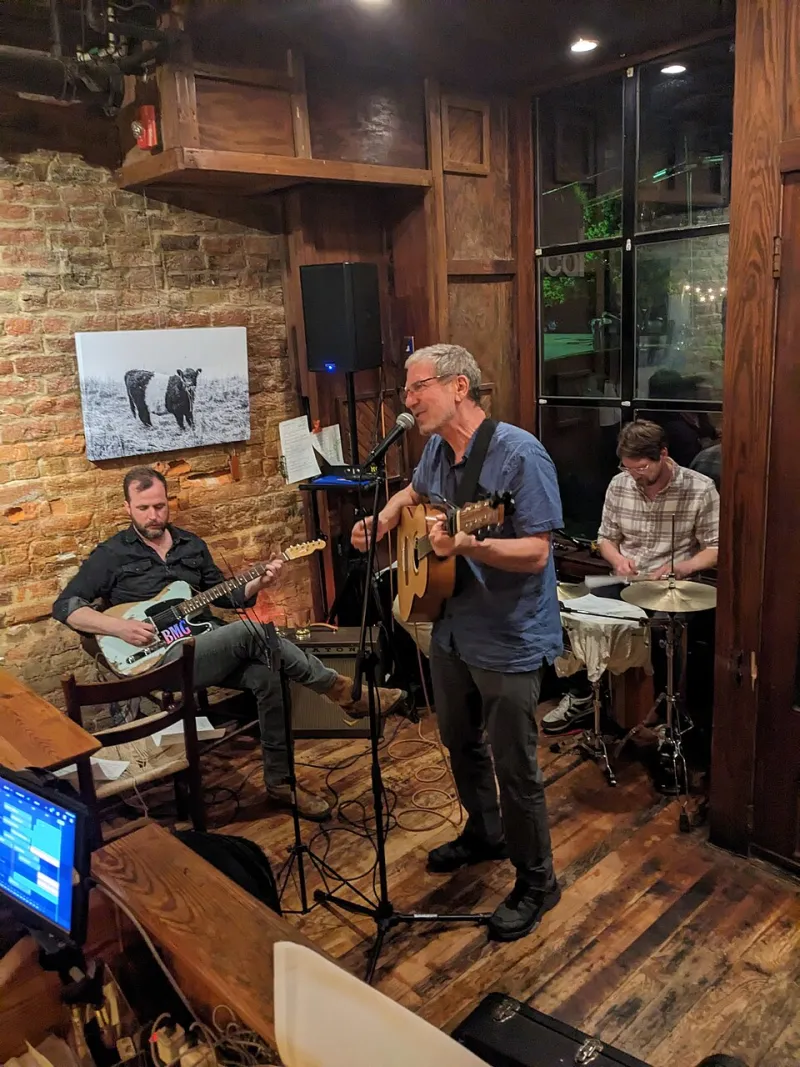
Photo by Photo by Aaron Douglas on Unsplash on Unsplash
There's a folding table in the back of every small venue in America, and right now it's doing more business than most boutiques.
Walk into any underground rap show from Atlanta to Portland and you'll see it: a card table stacked with tees, hoodies, and crewnecks, run by the artist's cousin or the artist themselves, cash app and card reader side by side. Ten years ago, that table was beer money. Tonight, for a growing number of indie rappers, it's the whole business model.
The Numbers Nobody in Fashion Wanted to Look At
Ask around the underground and you'll hear the same story with different names. Artists who've been grinding a decade, streaming numbers stuck in the low thousands, quietly building merch operations that dwarf their music revenue. One Midwest rapper I talked to — let's call him Dee, because his label situation is, in his words, 'complicated' — pulled in roughly $38,000 off merch last year. His catalog? A little north of $2,000.
'The music gets people in the door,' Dee told me backstage at a warehouse show on Chicago's South Side. 'The clothes pay my rent. It's been that way for three years.'
He's not alone. The economics are brutal and simple. A streaming payout on 50,000 plays might cover a tank of gas. A screen-printed tee that costs $9 to make sells for $35 at the show, cash in hand, no intermediary, no royalty split, no waiting period. Every independent artist eventually does this math. Some of them never stop.
From Table to Label
What's changed is what happens after the table. The smart ones aren't just printing tour dates on Gildan blanks anymore. They're designing capsule collections, dropping limited runs on Instagram, and watching them sell out in hours to people who've never heard a single track.
That's the part that should scare the established streetwear brands: the customer base has decoupled from the fan base. Gen Z shoppers who found the rapper through a fit pic, not a playlist, are buying the clothes as clothes. The music became the marketing, not the product.
Take the three artists driving this shift in their own scenes:
The first is a Queens rapper whose hand-bleached denim jackets — each one unique, each one numbered — started showing up on strangers in Brooklyn who couldn't name a single one of his songs. He now releases collections seasonally, like an actual brand, and treats his shows as pop-up shops with a soundtrack.
The second, out of Houston, leaned into the local angle hard. His 'Screwed & Sewn' line uses fabrics sourced from the same thrift stores where he copped his first stage fit. It sold out twice. He's since collaborated with a barbershop chain on a capsule that lives permanently in three locations around the city.
The third is the most interesting case: a Detroit artist whose merch line now has its own Instagram following, separate and larger than her music account. She drops pieces the way she used to drop loosies — unannounced, limited, gone in a day. The scarcity isn't a strategy she read about. It's just what happens when you can only afford to print forty units.
Why the DIY Look Is the Sell
Here's the irony: the thing major labels spent decades polishing out of rap culture — the rough edges, the local references, the visible hand of somebody actually making the thing — is exactly what young consumers are paying premiums for now.
Fast fashion taught a generation that mass-produced is worthless. A screen print with a crooked logo and a hand-numbered tag reads as proof of a human. A hoodie designed in a bedroom in Oakland and sold at a show in Sacramento carries a story that a $120 mall-brand collab can't fake. The underground rapper's whole aesthetic — no filter, no focus group — turns out to be a feature, not a bug.
There's a deeper current underneath all this, and it rhymes with the story we keep telling on this site. The same hustle that moved mixtapes out of trunks is now moving garments out of duffel bags. The skills never left. They just changed inventory.
The Pipeline Runs Both Ways
Don't think the industry hasn't noticed. Streetwear brands are quietly signing merch-table operators to design deals. A&R reps are scrolling fashion tags as often as they're checking SoundCloud. When a rapper can sell out a drop without a cosign, that's not just revenue — it's proof of an audience that shows up and pays, which is the only metric that's ever really mattered.
Some artists will take the deal. Most won't, because the math doesn't favor it. Why sign away 85% of a clothing line to a partner who's going to mass-produce the exact thing people loved because it wasn't mass-produced?
The folding table in the back of the venue isn't a stepping stone to the fashion industry. Increasingly, it IS the fashion industry — one screen print, one Instagram drop, one sold-out run at a time. The suits will figure it out eventually. The block already knows.