Deli Aisle A&R: When the Album Drops Between the Cigarette Case and the Coolers
There's a moment at every corner store listening party that no label executive has ever witnessed. The owner — plastic apron, toothpick in his mouth, keys jangling off his belt — flips the breakers on a dusty PA that hasn't left the stockroom since 2009. The artist nods. The needle drops. And then a hundred people who've known this rapper since he was stealing snacks in the fifth grade decide, right there between the chip rack and the rotisserie case, whether the record is real or not.
No press run. No playlist placement. No comment section full of bots. Just the block, the beats, and a verdict you can't buy.
How a Bodega Became a Venue
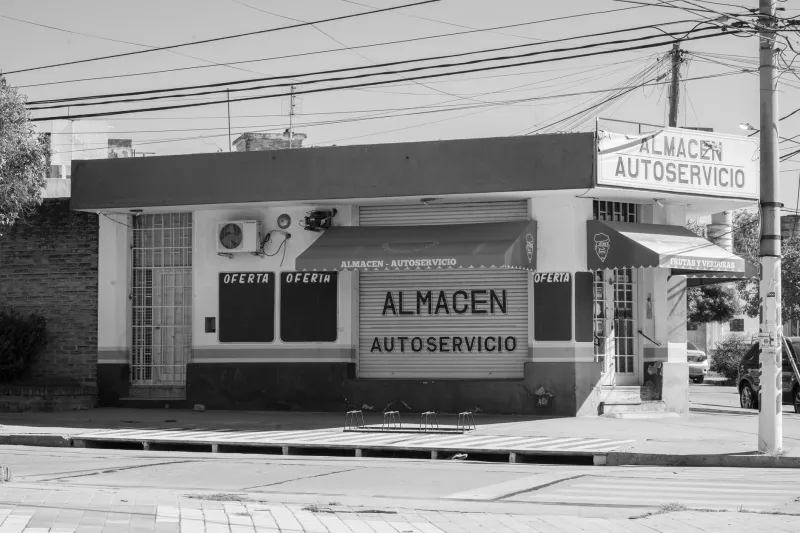
The setup is almost always the same. The artist pays the owner for the night — anywhere from a couple hundred bucks to whatever the register holds — and the store closes early. Folding chairs come out of nowhere. Somebody's cousin runs an extension cord from the apartment upstairs. The coolers keep humming, the deli slicer gets unplugged, and suddenly a 1,200-square-foot corner store in Bed-Stuy, or Gary, or Northeast D.C., is the most exclusive listening room in the country.
The logistics sound ridiculous until you see them work. The playback happens in shifts because the aisles only hold so many bodies. People walk in for a loosie and a Dutch, hear forty seconds of the record through the doorway, and stay for the whole thing. That's the conversion rate no streaming campaign can touch — nobody came here for you, and now they know your whole album.
Compare that to the industry model: a listening event at a rented loft with an open bar, an attendee list full of people paid to nod, and a hashtag that dies by morning. The corner store version has no open bar. It has a guy named Rush pouring Hennessy out of a paper bag into solo cups, and if the music stinks, he will tell you. Out loud. Mid-track.
The Owners Who Hold the Aux
Here's the part nobody writes about: the store owners have become tastemakers, and they didn't ask for the job.
Take the guys we talked to across three takeovers. There's the Dominican spot on the Grand Concourse where the owner, a retired sound engineer from the freestyle era, still mixes the playback himself and will stop the record to tell you your second verse is mixed too hot — because he mixed records when your father was in high school. There's the liquor store on the South Side where the owner lets artists host playbacks in exchange for a case of product and refuses to take more, on the theory that "if the block makes money with me, I make money." And there's the Gulf Coast corner store where the owner keeps a corkboard of flyers from every artist who's ever played there — forty deep now, a wall of local history nobody's museum has thought to preserve.
These men and women aren't curators by design. They're just the ones who stayed. They watched the kids grow up, they know whose brother just came home, and they know which rapper raps about a block he doesn't live on. When one of them nods along to your track, that's a co-sign with a decade of due diligence behind it. When they don't, word travels the same night.
Why It Converts Better Than the Algorithm
Streaming campaigns sell impressions. Corner store parties sell memory.
Think about what the listener walks away with. They heard the record standing next to the person who made it. They watched their neighbor's son get emotional on the hook. They bought the download or the burned copy or the merch tee off a folding table next to the lottery machine. That transaction happened in the same store where they cash their checks and buy their kids' snacks. The music is now woven into their actual life, not floating in a playlist between a podcast and a workout mix.
The artists feel it too. One rapper told us he got more real feedback in ninety minutes at a store takeover than from a year of comment-section numbers. "Online, a thousand streams could be a thousand bots," he said. "Here, if Slim from the barber shop starts nodding on the second track, that's a thousand streams I can't fake."
And the block remembers. Weeks later, the store owner still plays the record during morning shifts. Regulars hear it buying their coffee and scratch-offs. The album becomes part of the store's soundtrack, which means it becomes part of the neighborhood's. You cannot buy that with a playlisting pitch.
The Weirdest A&R Room in America
There's no A&R rep at these things, which is exactly the point. The A&R is the room itself. The verdict comes from the auntie who raised half the block, the older heads who remember when this same corner store hosted basement-tape swap meets in the '90s, and the seventeen-year-old filming vertical video for a platform that wasn't invented when the PA was bought.
If the record's cold, the room tells you in real time — people drift back to the coolers, conversations get louder than the monitors, somebody says "it's alright" in a tone that ends careers. If the record's warm, you'll know that too, because the block doesn't lie to its own. It never had a reason to.
The majors keep spending millions trying to manufacture organic moments. Meanwhile, for the price of a night's register and a hundred solo cups, an independent artist can buy the most honest focus group in music: the people who actually know them, standing in a store they actually shop in, hearing the record before any blogger, any curator, any algorithm gets a vote.
The coolers hum. The needle drops. The block decides.
It's the only A&R room left that can't be gamed.